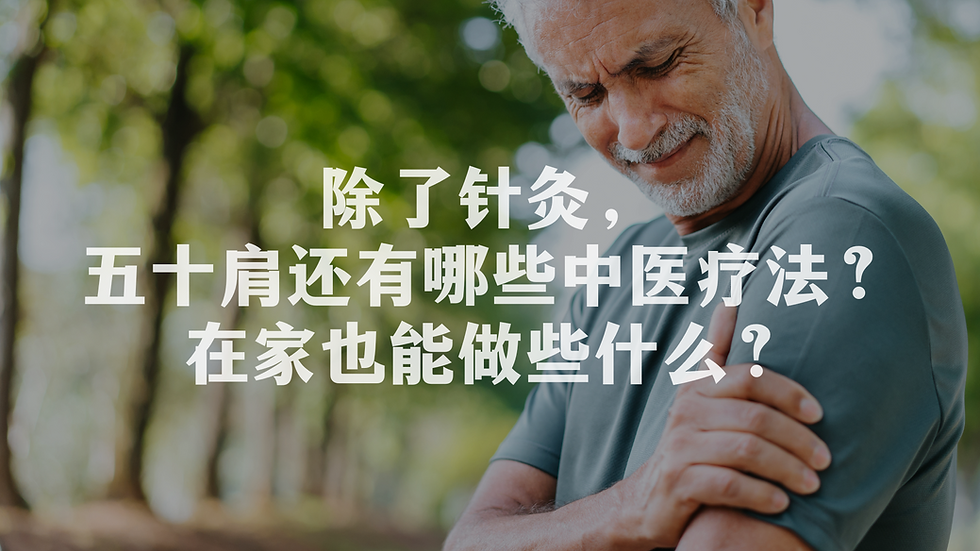
What Happens if You Don't Treat Frozen Shoulder? Will It Really Get Better on Its Own?
Written By:C.M.P. Melody 林医师

This is a question on the minds of many people with frozen shoulder. Your shoulder is painful and stiff—is it enough to just tough it out and wait for it to get better on its own?
The answer is: "Frozen shoulder" does have a tendency to heal on its own, but this process can be extremely long and painful, and failing to treat it can lead to a host of other problems, including an incomplete recovery.
The Consequences of Not Treating Frozen Shoulder
If you ignore frozen shoulder, you may experience the following:
🔸Worsening Pain and Stiffness:
👉🏻During the painful ("freezing") stage, you'll experience severe pain, especially at night, which can make it hard to sleep. Even moving your arm a little will be difficult.
👉🏻Once you reach the stiff ("frozen") stage, the pain may lessen, but your shoulder's range of motion will become extremely limited. Simple daily actions like combing your hair, getting dressed, reaching for a seatbelt, or scratching your back will become impossible. This can severely impact your quality of life and independence.
🔸A Long and Unpredictable "Self-Healing" Process:
While frozen shoulder can resolve on its own, this "self-healing" process can be very, very long, often taking one to three years, or even more. During this time, you'll have to endure daily pain and inconvenience. Some people may never fully regain their original range of motion, leaving them with a permanent functional limitation.
🔸Muscle Atrophy and Weakness:
Because your shoulder is painful and stiff, you won't be able to or will be afraid to move the affected limb. This will cause the muscles in your shoulder and arm to gradually weaken and atrophy. Even if the pain eventually subsides, this muscle weakness may hinder your functional recovery.
🔸Psychological Impact:
Long-term pain and daily inconvenience can lead to frustration, anxiety, and even affect your sleep and mood, significantly lowering your quality of life. This psychological burden can, in turn, negatively impact your physical recovery.
🔸Compensatory Injuries:
To perform daily actions, your body may unconsciously start using other parts to compensate, such as your neck and back, to make up for the shoulder's lack of movement. Doing this long-term can lead to new pain or strain in your neck, spine, and even your healthy shoulder.
Will It Really Get Better on Its Own?
Theoretically, frozen shoulder is a self-limiting disease, meaning it will resolve on its own after a certain period. However:
🔹The Time Cost Is Huge:
The "self-healing" process is long and painful, potentially lasting for years. You may have to endure years of pain and disability.
🔹Full Recovery Is Not Guaranteed:
Not everyone will fully recover their pre-stroke range of motion. Studies have shown that even after "self-healing," a significant number of patients are left with some degree of residual stiffness or pain.
Why Is "Waiting It Out" Not Recommended?
👉🏻 Shorten the Duration and Lessen the Suffering:
Active treatment and rehabilitation can significantly shorten the duration of the condition and alleviate the pain and stiffness you experience during the painful and stiff phases.
👉🏻 Prevent Permanent Disability:
Professional rehabilitation guidance can effectively prevent the worsening of joint adhesions, help release them, and maximize the recovery of your joint's range of motion, preventing permanent disability.
👉🏻 Improve Quality of Life:
The sooner you recover, the sooner you can return to a normal life and enjoy a better quality of life.
While frozen shoulder does have a tendency to resolve on its own, this process is often long, painful, and doesn't guarantee a full recovery. To reduce suffering, shorten the duration, and avoid long-term functional limitations, it's strongly recommended that you seek professional medical help and begin active treatment and rehabilitation as soon as you notice the symptoms of frozen shoulder.
An early diagnosis, combined with a comprehensive treatment plan including physiotherapy, acupuncture, and Tui Na, along with consistent at-home exercises and a healthy lifestyle, is the best path to defeating frozen shoulder!